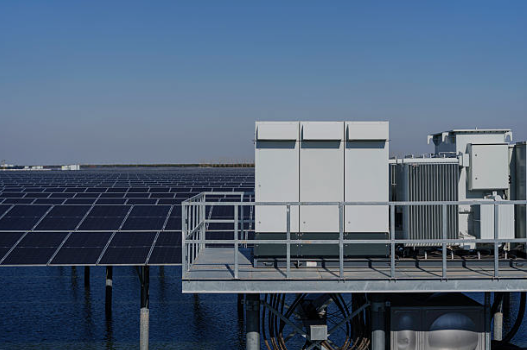
Renewable energy infrastructure transformers for solar, wind, and BESS projects. High-efficiency iron core, K-factor, inverter duty, and grid connection transformer solutions engineered for long-term reliability.
In renewable energy infrastructure, transformers are no longer passive voltage-conversion devices. They are thermal systems, harmonic filters, mechanical structures, and long-term reliability components rolled into one.
From an engineering standpoint, renewable energy infrastructure typically includes:
Hybrid renewable + storage plants
Grid connection substations
Inverter and converter stations
Unlike traditional generation, renewable systems are converter-dominated. Almost every major component between generation and grid involves power electronics.
This has several immediate implications for transformer design:
Non-sinusoidal current waveforms
High harmonic content
Low inertia systems
Frequent load cycling
Long energization time at partial load
Transformers connected to renewable infrastructure must therefore be designed for electrical distortion, not just rated power.
In many renewable projects, transformers are selected late in the design process. Often, a standard distribution transformer is specified based on kVA rating and voltage alone.
This approach creates problems.
Solar output ramps quickly with irradiance. Wind generation fluctuates with wind speed. BESS systems charge and discharge aggressively.
Transformers experience:
Increased insulation aging
Designs optimized for constant industrial loads do not age the same way under renewable conditions.
Renewable energy transformers must be designed based on harmonic spectrum, not only fundamental frequency.
Key engineering measures include:
Increased conductor cross-section
Reduced current density
Optimized winding geometry
Shielding against stray flux
K-factor or equivalent thermal design
In practice, many renewable EPCs now specify:
K-factor rated transformers
Rectifier or inverter-duty transformers
Phase-shifting transformers for multi-pulse systems
For large solar or wind plants, phase-shifting and multi-winding transformers are often used to reduce total harmonic distortion injected into the grid.
At Varelen, harmonic-resistant transformer designs are based on actual inverter data rather than assumed worst-case conditions.
Renewable energy projects operate for decades. Even small efficiency differences become significant over time.
Two factors make efficiency especially critical:
Long energization time
Renewable transformers are energized continuously, even when generation is low or zero.
Regulatory and ESG pressure
Losses directly impact project sustainability metrics.
In solar and wind applications, no-load losses can exceed load losses over the transformer’s lifetime.
Lifecycle energy efficiency
Project IRR
Carbon footprint calculations
Commonly used in:
Inverter stations
Indoor substations
Offshore wind platforms
Urban solar installations
Advantages include:
Reduced fire risk
Lower environmental impact
Simplified permitting
Minimal maintenance
However, dry-type transformers must be carefully designed for harmonic heating and ventilation. Poor airflow design leads to localized overheating.
Varelen dry-type transformers use VPI or resin encapsulation with thermal classes up to 180°C, allowing stable operation under fluctuating renewable loads.
Typically used in:
Grid connection substations
Large wind and solar parks
Outdoor installations
Renewable energy is often built where conditions are harsh, not convenient.
Typical environments include:
Deserts with high ambient temperatures
Offshore locations with salt corrosion
High-altitude wind farms
Cold regions with sub-zero temperatures
Transformers must be designed accordingly.
In cold climates, materials become brittle. Insulation systems must remain flexible, and oil properties must be carefully selected.
Transformers designed for -60°C environments require specific insulation coordination and mechanical allowances.
In desert solar plants, ambient temperatures combined with solar radiation increase thermal stress. Cooling systems must be sized for worst-case conditions, not average ones.
Renewable infrastructure is often located in harsh climates:
Desert solar farms
Offshore wind parks
High-altitude installations
Arctic renewable projects
Transformers must account for:
High ambient temperature
Low-temperature brittleness
Corrosion risk
Dust and salt exposure
Design adjustments include:
Enhanced cooling systems
Low-temperature insulation materials
Corrosion-resistant enclosures
Reinforced mechanical construction
Varelen engineers transformers capable of operating from -60°C environments to high thermal stress conditions, ensuring long-term performance stability.
Renewable energy infrastructure requires more than conventional transformer solutions.
Solar power plants, wind farms, and BESS installations create harmonic-rich, thermally dynamic operating conditions that demand engineered transformer designs.
Renewable energy infrastructure transformers must prioritize:
Harmonic resistance
High efficiency
Thermal margin
Environmental adaptability
A renewable energy infrastructure transformer is a transformer specifically designed for solar, wind, or battery energy storage projects. It is engineered to handle harmonic currents, load cycling, and long energization periods typical in renewable systems.
K-factor transformers are used because solar inverters generate harmonic currents. These harmonics increase eddy current losses and heating. A K-factor design ensures the transformer can safely handle non-linear loads without premature insulation aging.
An inverter duty transformer is designed for harmonic-rich environments. It includes enhanced thermal capacity, reduced current density, and improved stray flux control compared to standard distribution transformers.
It depends on site conditions. Dry-type transformers are often used indoors or where fire safety is critical. Oil-immersed transformers provide better cooling for high-capacity grid connection applications.