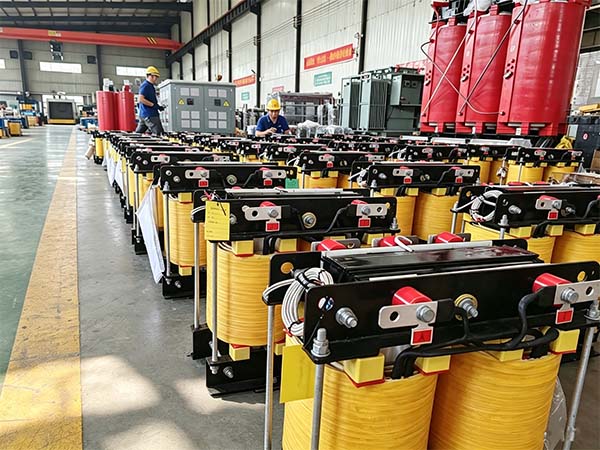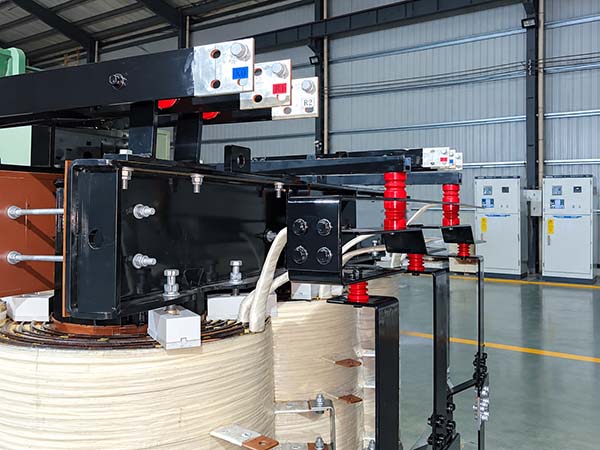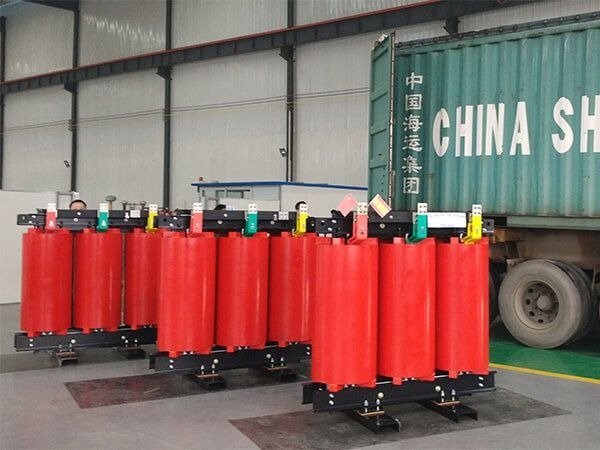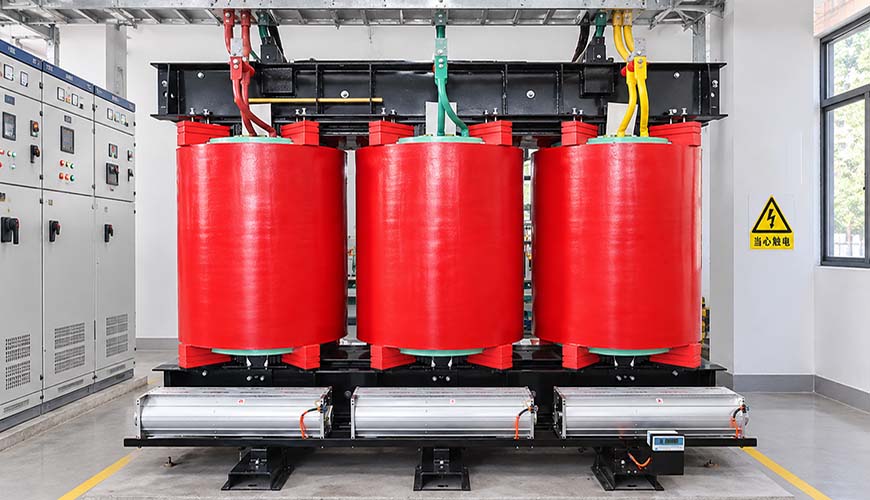
12.5 MVA 35 kV/10.5 kV dry type transformer provides medium-voltage power transformation for university campuses, educational complexes, research facilities, and large institutional distribution networks. Designed for indoor electrical infrastructure, this transformer can be engineered to meet project-specific requirements for electrical performance, cooling, insulation, fire safety, and installation conditions.
For universities with laboratories, lecture halls, libraries, student residences, data centers, and central utility facilities, reliable power distribution is essential to daily operations. A properly specified dry type transformer helps integrate the campus medium-voltage supply with downstream distribution systems while supporting operational safety and maintainability.
University campuses often contain multiple buildings with different electrical demand profiles. Laboratories may require stable power for sensitive equipment, while libraries, dormitories, teaching buildings, and campus utility systems create continuous or time-dependent loads.
12.5 MVA transformer can serve as a major power distribution component in a campus electrical network when its capacity, voltage ratio, impedance, and operating characteristics match the project requirements.
University distribution transformer may supply downstream substations or distribution feeders serving:
Teaching buildings and lecture halls
Research laboratories and testing facilities
Libraries and administrative buildings
Student residences and dining facilities
Campus data centers and IT infrastructure
Heating, ventilation, air conditioning, and utility systems
The actual load arrangement depends on the campus single-line diagram and electrical design.
Dry type transformers use solid insulation systems rather than liquid insulation as the primary dielectric medium. Depending on the design, they may use cast resin windings or another dry type insulation construction.
For indoor university installations, the transformer design should account for room ventilation, ambient temperature, fire protection requirements, maintenance access, acoustic limits, and the building's electrical safety provisions.
The following table summarizes the confirmed basic requirements and the technical information that should be finalized during engineering approval.
| Parameter | Specification |
|---|---|
| Rated capacity | 12.5 MVA |
| High-voltage rating | 35 kV |
| Low-voltage rating | 10.5 kV |
| Transformer type | Dry type transformer |
| Installation location | University distribution room |
| Insulation construction | To be confirmed according to the approved design |
| Cooling method | AN |
| Frequency | T50Hz |
| Vector group | Dyn11 |
| Impedance voltage | To be confirmed |
| Insulation level | H |
| Temperature rise | To be confirmed |
| Enclosure / IP rating | To be confirmed according to installation conditions |
| Applicable standards | IEC60076 |
| Accessories and monitoring | According to the approved technical requirements |
Engineering note: The 35 kV and 10.5 kV ratings define the nominal voltage ratio. They do not, by themselves, determine the winding connection, insulation level, cooling method, temperature rise, or compliance with a particular standard. These parameters must be verified against the approved datasheet and project requirements.
The 12.5 MVA rating defines the transformer's apparent power capacity under its specified operating conditions.
The 35 kV high-voltage side is intended for connection to the relevant medium-voltage supply system, while the 10.5 kV low-voltage side can feed a downstream medium-voltage distribution network.
Whether this configuration is appropriate for a specific university depends on the utility supply voltage, campus distribution architecture, protection coordination, and connected load requirements.
Selecting a dry type transformer for an indoor electrical room requires consideration of more than rated power and voltage.
The insulation system must be suitable for the transformer's voltage class, operating temperature, environmental conditions, and specified dielectric test requirements.
Cast resin construction may be considered where the project calls for encapsulated windings. Other dry type constructions may be suitable depending on the application and engineering requirements.
The final insulation design should be supported by the manufacturer's technical documentation and applicable type or routine test requirements.
Cooling performance is especially important for a 12.5 MVA transformer installed inside a building.
The transformer room should provide sufficient airflow to remove operating losses and maintain acceptable ambient conditions. Ventilation design must consider heat dissipation, air inlet and outlet locations, room geometry, and the manufacturer's recommended operating limits.
The cooling designation must be confirmed for the selected transformer design rather than assumed from the term "dry type."
A transformer of this capacity requires an installation plan that accounts for total operating weight, foundation loading, transport access, lifting points, anchoring, and maintenance clearance.
The university's structural and electrical engineering teams should verify floor loading and access routes before delivery.
University environments may include lecture halls, libraries, offices, residences, and research spaces where noise control is important.
The required sound level should be specified during procurement. Transformer noise performance depends on the magnetic core, winding design, structural arrangement, cooling equipment, and installation conditions.
Where necessary, the room design can incorporate suitable acoustic treatment and vibration isolation without compromising ventilation or electrical clearances.
A 12.5 MVA 35 kV/10.5 kV dry type transformer can be considered for several types of campus infrastructure when the electrical design supports this arrangement.
The transformer may form part of the campus medium-voltage distribution system, supplying downstream switchgear and feeders for multiple buildings.
The number of outgoing feeders, busbar configuration, protection scheme, and redundancy arrangement must be established by the campus electrical design.
Research buildings can contain specialized instruments, environmental control systems, test equipment, and other electrically demanding loads.
Transformer selection should consider load variation, harmonics, power quality requirements, and the characteristics of sensitive equipment connected downstream.
Where nonlinear loads are significant, the engineering team should assess harmonic currents and their impact on transformer losses and temperature rise.
Libraries, lecture halls, and academic buildings may combine lighting, HVAC, elevators, computer equipment, and general power loads.
The transformer should be selected based on a documented load assessment, including demand factors, expected expansion, and the consequences of an outage.
A university data center may require continuous operation, carefully coordinated protection, and defined backup power arrangements.
The transformer itself does not guarantee uninterrupted power. Reliability depends on the complete electrical architecture, including redundant supplies where required, UPS systems, standby generation, switchgear, and protection coordination.
Before ordering a 12.5 MVA 35 kV/10.5 kV dry type transformer, the project team should review the following factors.
Calculate the expected maximum demand, load diversity, future expansion, and any significant motor starting or nonlinear loads.
A 12.5 MVA rating should be confirmed against the campus load schedule and the intended transformer operating arrangement.
The required impedance voltage affects short-circuit current, voltage regulation, and coordination with downstream equipment.
The design should be checked against the utility's short-circuit level, switchgear withstand ratings, and protection settings.
Specify the required insulation withstand levels for the 35 kV system and the 10.5 kV system according to the applicable standards and installation conditions.
The winding connections and neutral grounding arrangements must also match the system design.
Dry type construction avoids the use of liquid insulating fluid inside the transformer, but it does not make the installation fireproof or eliminate all fire risks.
The complete installation must comply with applicable fire codes, building regulations, electrical safety requirements, and the project's risk assessment.
Depending on the design, monitoring and protection provisions may include temperature sensors, winding temperature indication, alarms, trip contacts, and communication interfaces.
The final accessory list should reflect the university's monitoring platform, maintenance procedures, and operational requirements.
The applicable standards should be agreed upon before manufacturing begins.
IEC 60076-11 is a relevant international standard for dry type power transformers. Other parts of the IEC 60076 series may apply to specific transformer requirements and tests.
Depending on the project and jurisdiction, additional requirements may apply to:
Dielectric withstand and insulation testing
Winding resistance and voltage ratio measurements
No-load and load losses
Impedance voltage and short-circuit characteristics
Temperature-rise performance
Partial discharge, where specified
Acoustic performance
Routine and special testing
Inspection and documentation
The manufacturer should provide the test plan, approved drawings, technical datasheet, and required test reports according to the purchase specification.
Do not assume that a transformer complies with a particular standard, efficiency class, or certification scheme unless the relevant design and test documentation supports that claim.
University electrical infrastructure often has specific requirements relating to room dimensions, installation access, ventilation, operating noise, protection, and future expansion.
A project-specific transformer design can address these constraints through coordinated engineering.
Key considerations include:
Voltage ratio and winding configuration matched to the campus network
Insulation and cooling design selected for the installation environment
Mechanical dimensions coordinated with the distribution room
Monitoring and protection accessories defined during technical review
Test documentation prepared according to the approved specification
Delivery and installation interfaces coordinated with the project schedule
The most suitable transformer is not necessarily the one with the largest capacity or the most accessories. It is the unit that satisfies the electrical, mechanical, environmental, and operational requirements of the intended installation.
It can be used as a medium-voltage power distribution transformer for university campuses, research facilities, institutional buildings, and other large facilities when the supply voltage and downstream distribution design are compatible.
Dry type transformers do not use liquid insulating fluid as the primary insulation medium. Depending on the design and installation, this can be advantageous for indoor applications where liquid containment and associated fire-risk considerations are important. The complete installation must still satisfy the applicable fire and electrical safety requirements.
That depends on the campus demand profile, peak load, load diversity, future expansion, redundancy requirements, and the intended distribution arrangement. A load study is necessary before confirming the rating.
The 35 kV rating is the nominal high-voltage winding rating, and 10.5 kV is the nominal low-voltage winding rating. The actual winding connections, grounding arrangement, and system compatibility must be confirmed in the approved design.
Provide the rated capacity, voltage ratio, frequency, vector group, impedance, insulation levels, cooling method, installation conditions, applicable standards, accessory requirements, quantity, destination, and requested delivery schedule. If some values are not yet available, the supplier can help identify the information needed for technical clarification.
Yes, project-specific engineering can address room dimensions, installation access, cooling requirements, noise limits, protection interfaces, and monitoring needs. Final customization depends on the electrical design and verified technical constraints.
Planning a university distribution room or upgrading an existing campus electrical network?
Share your project requirements to receive a technical review and a quotation for a 12.5 MVA 35 kV/10.5 kV dry type transformer.
To help us evaluate your project, please provide:
Required quantity
System frequency
High- and low-voltage connection requirements
Vector group and impedance, if specified
Applicable standards
Indoor installation and ventilation conditions
Required accessories and monitoring functions
Destination and target delivery date
Our engineering team can review the available information, identify missing technical parameters, and help establish a transformer specification suitable for your university distribution project.