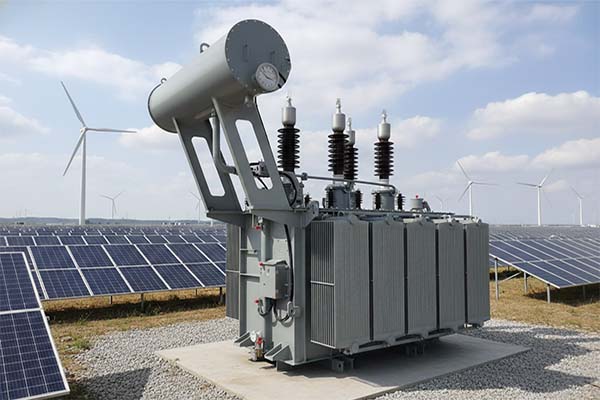
Varelen grid power transformers are specifically designed to enhance reliability and operational flexibility and are applied in solar energy
In the power generation step-up substation, it is a key node for power transmission and is of vital importance to the stability of the system
The solar power generation industry in China has entered a stage of rapid development. With the continuous expansion of solar power generation scale and the increasing demand for reducing the cost per kilowatt-hour, the transformer, an important equipment in the power generation system, is also facing many challenges. The complexity and characteristics of the power generation system and its operating environment
Particularities include:
Varelen, with its mature transformer design and manufacturing technology, provides complete transformer solutions for the solar power generation industry based on the characteristics and complexity of solar power generation systems. These solutions include high-voltage and large-capacity oil-immersed and dry-type step-up transformers for power generation, as well as power transformers for transmission. Additionally, it addresses operational conditions such as long-term overloading and frequent switching. We provide corresponding transformer solutions. Our products feature numerous advantages such as safety, reliability, energy conservation and high efficiency, supporting the solar power generation industry in continuously improving its industry standards.
Here’s the thing.
Everyone loves talking about solar panels and wind turbines. They’re visible. They’re flashy. They photograph well.
Transformers? Not so much.
But I’ll say it straight: without transformers, modern renewable energy simply doesn’t work at scale. Not reliably. Not efficiently. And definitely not profitably.
I’ve spent years looking at how renewable projects succeed—or quietly fail—and transformers sit right in the middle of that story. Let’s talk about why.
Short answer: Because renewable energy doesn’t speak the same electrical “language” as the grid.
Solar panels, wind turbines, and battery storage systems all generate power at voltage levels that are useless for transmission or grid connection. Transformers step that voltage up or down so electricity can actually move where it’s needed.
But that’s just the surface.
Transformers in renewable energy systems also handle:
Grid synchronization
Power quality control
Electrical isolation
Loss reduction over long distances
They connect chaos to order.
Solar power plants generate DC electricity, which inverters convert to AC. That AC power is messy—rich in harmonics and constantly changing with irradiance.
Transformers sit between solar inverters and the medium-voltage grid to:
Match inverter output to grid voltage
Withstand high harmonic distortion
Operate efficiently under partial load conditions
Bottom line: Solar transformers aren’t running at steady load.
They must handle:
Rapid load fluctuations
Extended high-temperature operation
High switching frequencies from inverters
That’s why insulation systems, thermal class (155°C or 180°C), and low-loss core design matter more here than in traditional distribution transformers.
They live a harder life.
Wind turbines don’t ramp up smoothly. They surge. They stall. They vibrate. Offshore units add salt, humidity, and brutal maintenance constraints to the mix.
Wind power transformers are used in:
Nacelles (inside the turbine)
Tower bases
Offshore substations
Answer upfront: Mechanical strength and thermal stability.
Key requirements include:
Reinforced windings to handle vibration
Insulation systems resistant to moisture
Designs that tolerate frequent overloads
And no, standard grid transformers won’t last long here. I’ve seen that mistake made more than once.
They’re doing double duty.
Battery energy storage systems push power to the grid and pull power from it. That bidirectional flow stresses transformers in ways traditional systems never did.
Transformers for BESS must handle:
High cycling frequency
Fast transient currents
Partial-load efficiency demands
Because storage systems rarely operate at full load.
Losses during idle or low-load operation quietly eat into project returns. That’s why low no-load loss design isn’t a “nice-to-have” anymore. It’s financial survival.
Fire safety is critical
Installation is indoors or near people
Environmental risk must be minimized
Common uses:
Commercial solar installations
Energy storage facilities
Urban renewable projects
Power ratings are high
Outdoor installation is available
Space efficiency matters
Modern designs using biodegradable insulating fluids reduce environmental concerns without sacrificing performance.
Because renewable energy margins are thin.
Every watt lost in a transformer is a watt you never sell. Over 20 or 30 years, that adds up—fast.
High-efficiency transformers help by:
Reducing no-load losses
Lowering operating temperatures
Extending insulation life
In renewable energy projects, transformer losses directly affect:
Levelized cost of energy (LCOE)
Return on investment
Compliance with efficiency regulations
Efficiency isn’t marketing fluff. It’s math.
Answer first: You don’t start with power rating alone.
You evaluate the system as a whole.
Key factors include:
Voltage levels and grid requirements
Harmonic content from power electronics
Ambient temperature range
Installation environment (indoor, outdoor, offshore)
Applicable IEC or IEEE standards